
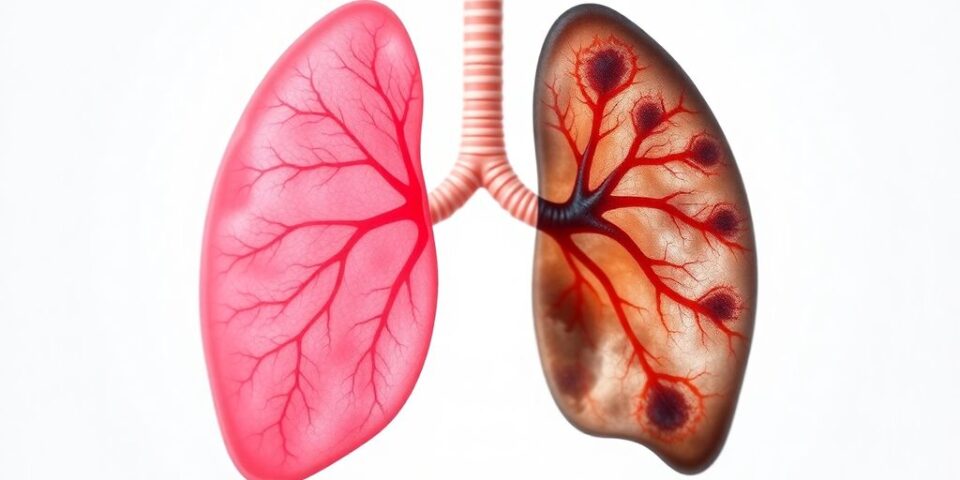
Lung cancer is a big deal, no getting around it. It’s not just some rare disease; it affects tons of people worldwide. Understanding how widespread it is can help us grasp the urgency of prevention and treatment efforts. It’s more than just numbers; it’s about real people and their families dealing with this tough diagnosis.
Global Incidence and Mortality Rates
Lung cancer’s impact is felt everywhere. Globally, it’s one of the most common cancers, and sadly, also one of the deadliest. The rates vary by region, but overall, it’s a major health concern. In 2022, lung cancer affected nearly 2.5 million individuals, leading to over 1.8 million deaths. This study analyzes global trends in lung cancer incidence and mortality, considering age, gender, and morphology. It also provides a forecast based on a bootstrap analysis.
Demographic Disparities in Lung Cancer
Lung cancer doesn’t affect everyone equally. Certain groups are at higher risk than others. Factors like age, gender, and ethnicity play a role. For example, older adults are more likely to be diagnosed, and there can be differences in rates between men and women. Also, some ethnic groups might face a greater risk due to a mix of genetic and lifestyle factors. It’s important to look at these demographic disparities to tailor prevention and treatment strategies effectively.
Socioeconomic Factors and Disease Burden
Your socioeconomic status can really impact your risk and outcome with lung cancer. People with lower incomes or less access to healthcare often face a bigger challenge. They might be more exposed to risk factors like pollution or have less access to early screening and quality treatment. This creates a cycle where those already struggling are hit hardest by the disease. Addressing these socioeconomic factors is key to reducing the overall burden of lung cancer. Here are some factors:
- Access to healthcare
- Exposure to pollution
- Education about risks
Key Risk Factors for Lung Cancer Development
Lung cancer, like many diseases, doesn’t just pop up randomly. Several factors can significantly increase a person’s risk. It’s not always a guarantee that someone will get it, even with these risks, but understanding them is important for prevention and early detection. Let’s break down some of the main culprits.
The Impact of Tobacco Use
Okay, this one is pretty well-known, but it’s worth repeating: smoking is the biggest risk factor for lung cancer. The more you smoke, and the longer you smoke, the higher your risk. It’s not just cigarettes either; cigars, pipes, and even secondhand smoke can all contribute. I remember reading a study about how even occasional smoking can increase your chances, which is kind of scary. If you’re a smoker, quitting is the single best thing you can do for your health. Quitting smoking is the best way to prevent lung cancer.
Environmental and Occupational Exposures
It’s not just what you inhale by choice; sometimes, it’s what’s in the air around you. Certain substances, especially in work environments, can really up your risk. Here are a few:
- Asbestos: This used to be common in construction materials, and exposure is linked to several types of cancer, including lung cancer.
- Radon: A naturally occurring gas that can seep into homes from the ground. Testing your home for radon is a good idea, especially in certain areas.
- Arsenic, chromium, and nickel: These can be found in some industrial settings. Proper safety measures are crucial in these workplaces. Exposure to secondhand smoke increases the risk.
Genetic Predisposition and Family History
Sometimes, your genes play a role. If you have a close relative (like a parent, sibling, or child) who had lung cancer, your risk might be higher. It doesn’t mean you’re destined to get it, but it’s something to be aware of. Scientists are still trying to figure out exactly which genes are involved and how they interact with other risk factors. It’s a complex puzzle, but research is ongoing.
Pre-existing Lung Conditions
Certain lung diseases can also increase your risk of developing lung cancer. For example:
- COPD (Chronic Obstructive Pulmonary Disease): This is often linked to smoking, but it can also be caused by other factors. Having COPD increases your risk.
- Pulmonary Fibrosis: This condition causes scarring in the lungs, which can also raise your risk.
- History of Lung Infections: Repeated or severe lung infections might also play a role, though the connection isn’t as clear-cut as with COPD or pulmonary fibrosis.
Recognizing the Early Signs of Lung Cancer
It’s really important to catch lung cancer early, but the tricky thing is that the first signs can be pretty subtle or easily mistaken for something else. A lot of people don’t realize anything is wrong until the cancer has already spread. Knowing what to look for can make a big difference.
Persistent Respiratory Symptoms
One of the most common early signs is a cough that just won’t go away. It might seem like a regular cough at first, but it sticks around for weeks or even months. Changes in a chronic cough, like coughing more often or coughing up more mucus, should also raise a red flag. Other respiratory symptoms include shortness of breath, wheezing, or chest pain that gets worse when you breathe deeply or cough. Sometimes, people might cough up blood, even just a little bit. Any of these symptoms warrant a visit to the doctor to rule out anything serious.
Systemic Manifestations of Disease
Lung cancer can also cause symptoms that affect the whole body, not just the lungs. These are called systemic symptoms. One common one is unexplained weight loss. You might find that you’re losing weight without even trying, and that’s definitely something to get checked out. Another symptom is fatigue. We all get tired sometimes, but this is a different kind of tiredness – it’s persistent and doesn’t get better with rest. Other systemic symptoms can include:
- Bone pain
- Headaches
- Weakness
These symptoms can be caused by other things, of course, but it’s important to consider them, especially if you have other risk factors for lung cancer.
Importance of Timely Medical Evaluation
The key takeaway here is that if you’re experiencing any of these symptoms, especially if you’re a smoker or have other risk factors, don’t ignore them. Early detection is crucial for successful treatment. Talk to your doctor about your concerns. They might recommend some tests, like a chest X-ray or a CT scan, to get a better look at your lungs. The earlier lung cancer is diagnosed, the better the chances of successful treatment and recovery. Don’t delay – your health is worth it. If you are experiencing coughing up blood, seek medical attention immediately.
Diagnostic Methodologies for Lung Cancer
Imaging Techniques for Detection
So, you think you might have lung cancer? The first step is usually imaging. Doctors use different kinds of scans to look for anything suspicious in your lungs. X-rays are a common starting point; they’re quick and easy, but they don’t always show everything. CT scans are more detailed and can reveal smaller nodules that might be missed on an X-ray. MRI scans are sometimes used, especially if the doctor suspects the cancer has spread. Then there are PET scans, which can show how active the cells are, helping to distinguish between cancerous and non-cancerous growths. It’s a whole process, but it’s how they get a good look at what’s going on inside.
Biopsy Procedures for Confirmation
If imaging shows something concerning, the next step is usually a biopsy. This is where they take a sample of tissue to examine it under a microscope. There are a few ways to do this. Bronchoscopy involves threading a thin tube down your throat and into your lungs to collect cells. A needle biopsy, either through the chest wall or guided by imaging, can also be used. Examining mucus samples for cancer cells is another method. The type of biopsy depends on where the suspicious area is located and how accessible it is. It’s not the most fun thing, but it’s the only way to know for sure if it’s cancer.
Molecular Profiling for Personalized Treatment
Once a lung cancer diagnosis is confirmed, doctors often perform molecular profiling. This involves analyzing the cancer cells to identify specific genetic mutations or other characteristics. This information can help determine the best treatment approach. It’s like figuring out the cancer’s unique fingerprint. Lung cancer biomarker testing identifies DNA changes within a tumor. Here’s why it matters:
- It helps doctors choose targeted therapies that are more effective.
- It can predict how well a patient will respond to certain treatments.
- It provides insights into the cancer’s behavior and potential for growth.
It’s all about personalizing the treatment plan to give the patient the best possible outcome.
Contemporary Treatment Approaches for Lung Cancer
Surgical Interventions and Their Efficacy
Surgery remains a cornerstone in treating lung cancer, especially when the disease is caught early and hasn’t spread too far. The goal is simple: remove the cancerous tissue. Different surgical options exist, like wedge resections (taking out a small piece), lobectomies (removing an entire lobe), or pneumonectomies (removing a whole lung). The choice depends on the cancer’s size and location. Success rates are higher when the cancer is localized. It’s a big deal, though, and recovery can be tough. Doctors carefully weigh the benefits against the risks, considering the patient’s overall health and lung function. For example, a patient might need lung surgery if the tumor is accessible and hasn’t spread to distant sites.
Radiation Therapy Modalities
Radiation therapy uses high-energy rays to kill cancer cells. It can be used alone or in combination with other treatments like surgery or chemotherapy. There are a few ways to deliver radiation. External beam radiation therapy (EBRT) is the most common, where a machine outside the body directs radiation at the tumor. Brachytherapy involves placing radioactive material directly inside or near the tumor. Stereotactic body radiation therapy (SBRT) is a more precise form of EBRT that delivers high doses of radiation in fewer sessions. Side effects can vary depending on the area being treated, but fatigue and skin irritation are common. Radiation therapy is often used when surgery isn’t an option or to shrink tumors before surgery. The type of radiation therapy used depends on the stage and location of the cancer.
Chemotherapy and Targeted Therapies
Chemotherapy uses drugs to kill cancer cells throughout the body. It’s often used for lung cancer that has spread beyond the lung. Chemo can be given intravenously or orally. Side effects are common, including nausea, hair loss, and fatigue. Targeted therapies are newer drugs that target specific molecules involved in cancer growth. These therapies are often less toxic than chemotherapy and can be very effective for certain types of lung cancer. For example, some lung cancers have mutations in the EGFR gene, and there are targeted therapies that specifically block EGFR. Targeted therapies are usually selected based on the genetic makeup of the tumor.
Immunotherapy in Lung Cancer Management
Immunotherapy is a type of treatment that helps the body’s immune system fight cancer. It works by blocking proteins that prevent the immune system from attacking cancer cells. Immunotherapy has shown great promise in treating lung cancer, especially for advanced stages. It doesn’t work for everyone, but when it does, the results can be long-lasting. Side effects can occur, as the immune system can sometimes attack healthy tissues. Common immunotherapy drugs include:
- Pembrolizumab
- Nivolumab
- Atezolizumab
Immunotherapy is often used in combination with chemotherapy or other treatments. It’s a rapidly evolving field, and new immunotherapy drugs are constantly being developed. The use of immunotherapy drugs has significantly improved survival rates for some lung cancer patients.
Preventative Strategies Against Lung Cancer
Smoking Cessation Programs
Quitting smoking is, without a doubt, the single most impactful thing someone can do to lower their risk of lung cancer. It’s tough, I know, but there are resources available. Smoking cessation programs can really make a difference. These programs often include counseling, support groups, and even medication to help manage withdrawal symptoms. It’s not just about willpower; it’s about having the right tools and support. Plus, it’s never too late to quit; the body starts to heal almost immediately after the last cigarette. You can find help through:
- Local hospitals
- Community centers
- Online resources
Mitigating Environmental Risks
It’s not just smoking; environmental factors play a role too. Radon, for example, is a naturally occurring gas that can seep into homes and increase lung cancer risk. Testing your home for radon is a pretty simple process, and mitigation systems can be installed if levels are high. Asbestos is another known carcinogen, so if you’re working in older buildings, take precautions. Also, try to minimize exposure to air pollution. I know, easier said than done, but things like:
- Checking air quality reports
- Using air purifiers
- Avoiding heavily polluted areas
can help. It’s all about being aware and taking small steps to reduce exposure. You can also read about cancer prevention on the CDC website.
Regular Health Screenings
For people at high risk of lung cancer, regular screenings can be a game-changer. Low-dose CT scans can detect lung cancer early, when it’s more treatable. The U.S. Preventive Services Task Force recommends annual screenings for people who:
- Have a history of heavy smoking
- Are current smokers
- Have quit smoking within the past 15 years
Talk to your doctor to see if screening is right for you. Early detection can significantly improve outcomes. Also, remember to avoid alcohol to reduce cancer risk. Early detection is key.
Living with a Lung Cancer Diagnosis
Support Systems and Resources
Dealing with a lung cancer diagnosis can feel incredibly isolating, but it’s important to remember that no one has to go through it alone. A strong support system can make a huge difference in a person’s quality of life during treatment and beyond. Finding the right resources can be a game-changer. It’s not just about medical care; it’s about emotional and practical support too.
Here are some ways to find support:
- Support Groups: Connecting with others who understand what you’re going through can be incredibly validating. Sharing experiences and tips can help reduce feelings of loneliness and anxiety. Check out local hospitals or cancer centers for groups in your area. You can also find online communities that offer a safe space to connect.
- Counseling and Therapy: Talking to a professional can provide tools for managing the emotional challenges of cancer. Therapists can help with anxiety, depression, and stress management. They can also offer strategies for coping with changes in relationships and body image. Consider finding support groups to help you cope with the diagnosis.
- Family and Friends: Leaning on loved ones can provide comfort and practical assistance. Don’t be afraid to ask for help with tasks like transportation, meal preparation, or childcare. Sometimes, just having someone to listen can make a big difference.
Palliative Care and Symptom Management
Palliative care focuses on relieving symptoms and improving quality of life for people with serious illnesses, like lung cancer. It’s not just for end-of-life care; it can be started at any point during treatment. The goal is to make the person as comfortable as possible by addressing physical, emotional, and spiritual needs.
Here’s what palliative care can involve:
- Pain Management: Cancer and its treatments can cause significant pain. Palliative care teams use a variety of methods to manage pain, including medications, physical therapy, and alternative therapies like acupuncture.
- Symptom Control: Other symptoms like nausea, fatigue, and shortness of breath can also be managed with palliative care. The team will work to find the best ways to alleviate these symptoms and improve comfort.
- Emotional Support: Palliative care also addresses the emotional and spiritual needs of the person and their family. This can include counseling, support groups, and spiritual guidance. Consider joining a virtual class to help you cope with the diagnosis.
Navigating Treatment Side Effects
Lung cancer treatments, such as surgery, chemotherapy, and radiation, can cause a range of side effects. These side effects can vary depending on the type of treatment, the person’s overall health, and other factors. It’s important to be prepared for these side effects and to work with the healthcare team to manage them effectively. Proactive management is key.
Here are some common side effects and how to deal with them:
- Fatigue: Cancer-related fatigue is different from normal tiredness. It’s persistent and can interfere with daily activities. Strategies for managing fatigue include getting enough rest, eating a healthy diet, and engaging in gentle exercise.
- Nausea and Vomiting: Chemotherapy can often cause nausea and vomiting. Anti-nausea medications can help control these symptoms. Eating small, frequent meals and avoiding strong odors can also be helpful.
- Hair Loss: Some chemotherapy drugs can cause hair loss. This can be a distressing side effect, but it’s usually temporary. Wigs, scarves, and hats can help people feel more comfortable during this time.
Useful Links:
