
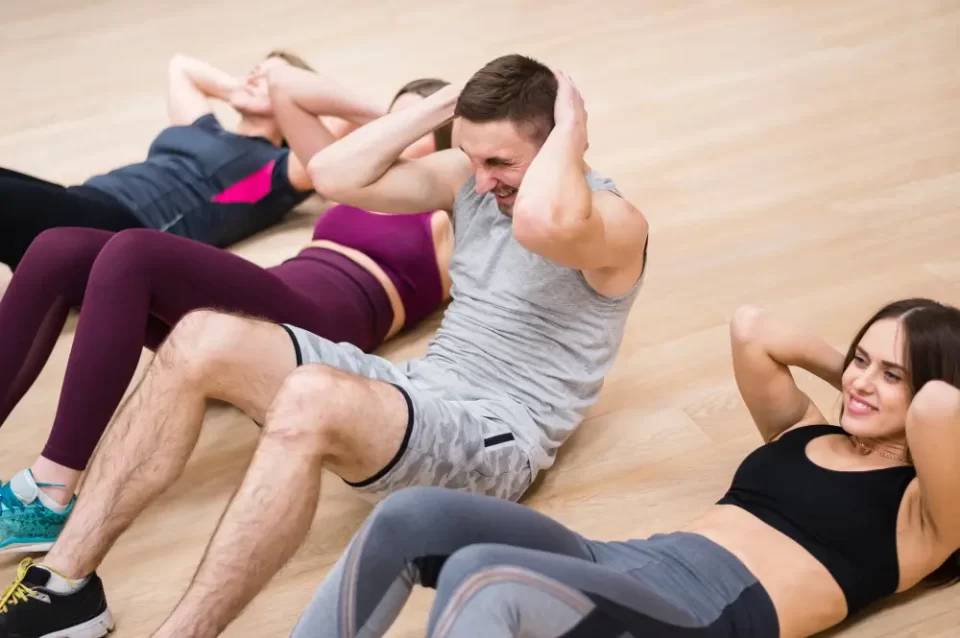
Two clients can walk into the same session and need completely different versions of the same exercise. One has trained for years and moves well under load. The other has never followed a structured program and compensates for every fundamental pattern. Delivering identical programming to both produces poor outcomes for at least one of them. Skilled trainers read what is in front of them and adjust accordingly, every time throughout the entire program.
Adjustments start assessment
In Home Personal Training builds its adjustment framework from the initial movement assessment conducted before programming begins. Assessment findings reveal which patterns a client executes with genuine control and which require regression before progressive loading applies. A client demonstrating poor hip hinge mechanics during assessment does not begin with Romanian deadlifts. Hip hinge drills against a wall come first, progressing toward the full pattern once movement quality holds consistently across multiple repetitions without breakdown.
Fitness level classification extends beyond simple beginner, intermediate, and advanced labels. Trainers assess each movement pattern independently because a client may perform upper-body pushing at an intermediate level while showing beginner-level hip mobility in the same session. Each pattern gets its own starting point and progression pathway rather than a single classification applied across the entire program uniformly.
Regression and progression
Every exercise sits within a regression and progression continuum. Trainers move clients along that continuum based on demonstrated performance rather than time elapsed or perceived effort during sessions. Regression reduces demand through load, range of motion, stability requirements, or mechanical leverage. A progression increases demand through the same variables applied oppositely. Pathways across common movement patterns follow a structured sequence:
- Squat pattern – Wall sit to bodyweight squat to goblet squat to single-leg squat progression
- Hinge pattern – Hip hinge drill to Romanian deadlift to single-leg Romanian deadlift progression
- Push pattern – Incline push-up to standard push-up to close-grip push-up to archer push-up
- Pull pattern – Band-assisted row to dumbbell row to suspension row progression
- Core pattern – Dead bug to hollow hold to ab wheel rollout progression
Each step represents a measurable increase in demand earned through consistent demonstration of the preceding variation’s technical standard.
Load and tempo adjustment
Beyond movement pattern regression and progression, trainers adjust load and tempo to match the client’s current capacity within the chosen variation. A beginner performing goblet squats with a light dumbbell and a three-second eccentric receives a different training stimulus than an intermediate client exercising the same movement with a heavier load and standard tempo. The exercise is identical. What changes is the demand applied to the individual performing it.
Tempo manipulation proves particularly useful across varied fitness levels. A slower eccentric phase increases time under tension and builds strength through a movement range. This is without requiring a load that the client is not yet ready to manage. Pause repetitions at the bottom position to develop strength at the most mechanically demanding point in the range. Both approaches increase training stimulus for clients who have mastered the movement pattern but have not yet reached the load progression threshold.
Monitoring informs adjustment
Trainers read performance signals during every working set to confirm the current adjustment remains appropriate. Technique breakdown under fatigue, compensatory movement patterns appearing mid-set, and incomplete range across later repetitions all indicate that current demand sits ahead of available capacity. The trainer adjusts immediately rather than pushing through sets that reinforce poor mechanics under load. Consistent monitoring keeps every client training at the productive edge of their current capability. This builds both movement competence and physical capacity across every session throughout the full program.
